
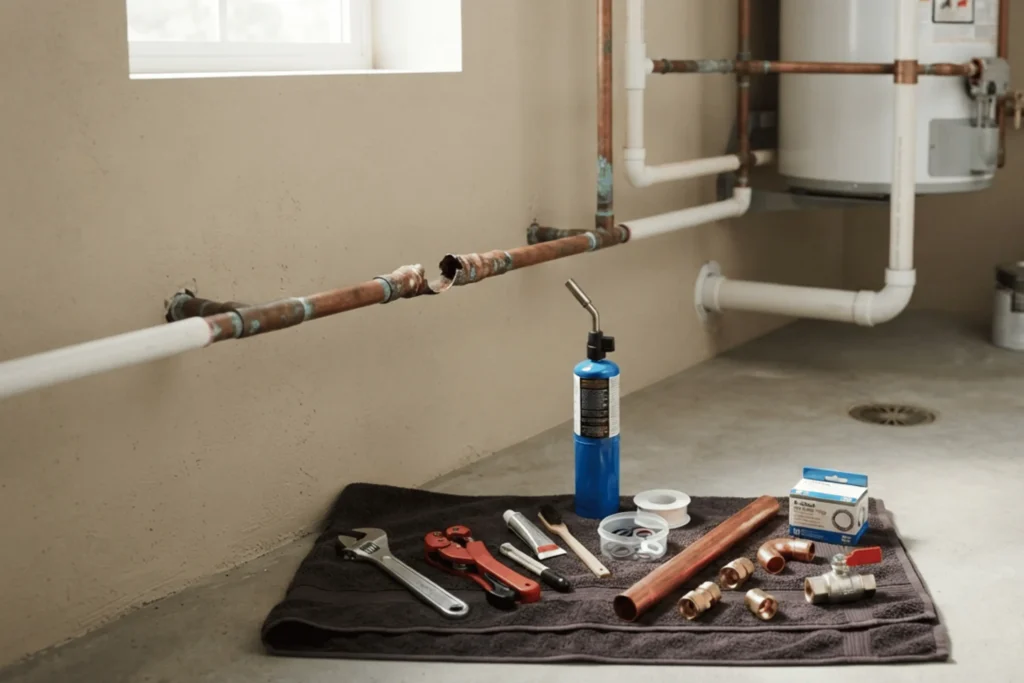
If your Houston home was built between the 1950s and the mid-1990s, there’s a real chance its original water supply lines are either galvanized steel or polybutylene, two materials that were standard practice in their day and are now widely recognized as ticking time bombs. Neither fails on a predictable schedule, which is exactly what makes them dangerous: a system can look and work fine for years right up until a fitting lets go behind a wall while you’re at work.
This matters beyond the inconvenience of a leak. Sudden pipe failures in older homes cause some of the most expensive water damage claims plumbers see, and both materials carry risks that go beyond a simple repair. This guide explains what these pipe materials are, how to tell if your home has them, and how to decide whether a full repipe is worth the investment.
What Is Polybutylene Pipe, and Why Was It Used?
Polybutylene, often called “poly-B,” is a gray or bluish plastic pipe that builders installed extensively in homes across the country from about 1978 through 1995. It was cheaper and faster to install than copper, which made it popular with production home builders during a period of rapid residential construction. Unfortunately, it turned out to react badly with chlorine and other oxidizers commonly used to disinfect municipal water supplies, including Houston’s system.
Over years of exposure, chlorine causes microscopic cracks to form inside the pipe wall, weakening it from the inside out in a way that’s completely invisible from outside the pipe. The material can look perfectly intact right up until it splits, and by the time a leak appears, the surrounding sections of pipe are often just as compromised.
What Is Galvanized Steel Pipe?
Galvanized pipe is steel coated with a layer of zinc to resist rust, and it was the standard for residential water supply lines before copper became affordable and widespread in the mid-20th century. Many Houston homes built before the 1960s, and some built later, still have galvanized supply lines somewhere in the system, particularly for the main line running from the street.
The zinc coating does its job for a while, but it eventually wears away from the inside, exposing the raw steel underneath to water. Once that happens, rust begins accumulating inside the pipe in a process plumbers call tuberculation, gradually narrowing the interior diameter and restricting flow long before the pipe actually fails outright.
Why These Materials Fail Differently
Polybutylene: Sudden, Catastrophic Splits
Because the damage happens throughout the pipe wall rather than at one weak point, polybutylene failures tend to be sudden and severe rather than a slow drip. A fitting or a straight run of pipe can split open completely, releasing a large volume of water in a short amount of time, often inside a wall or ceiling where it goes unnoticed until damage is extensive.
Galvanized Steel: Slow Restriction, Then Rupture
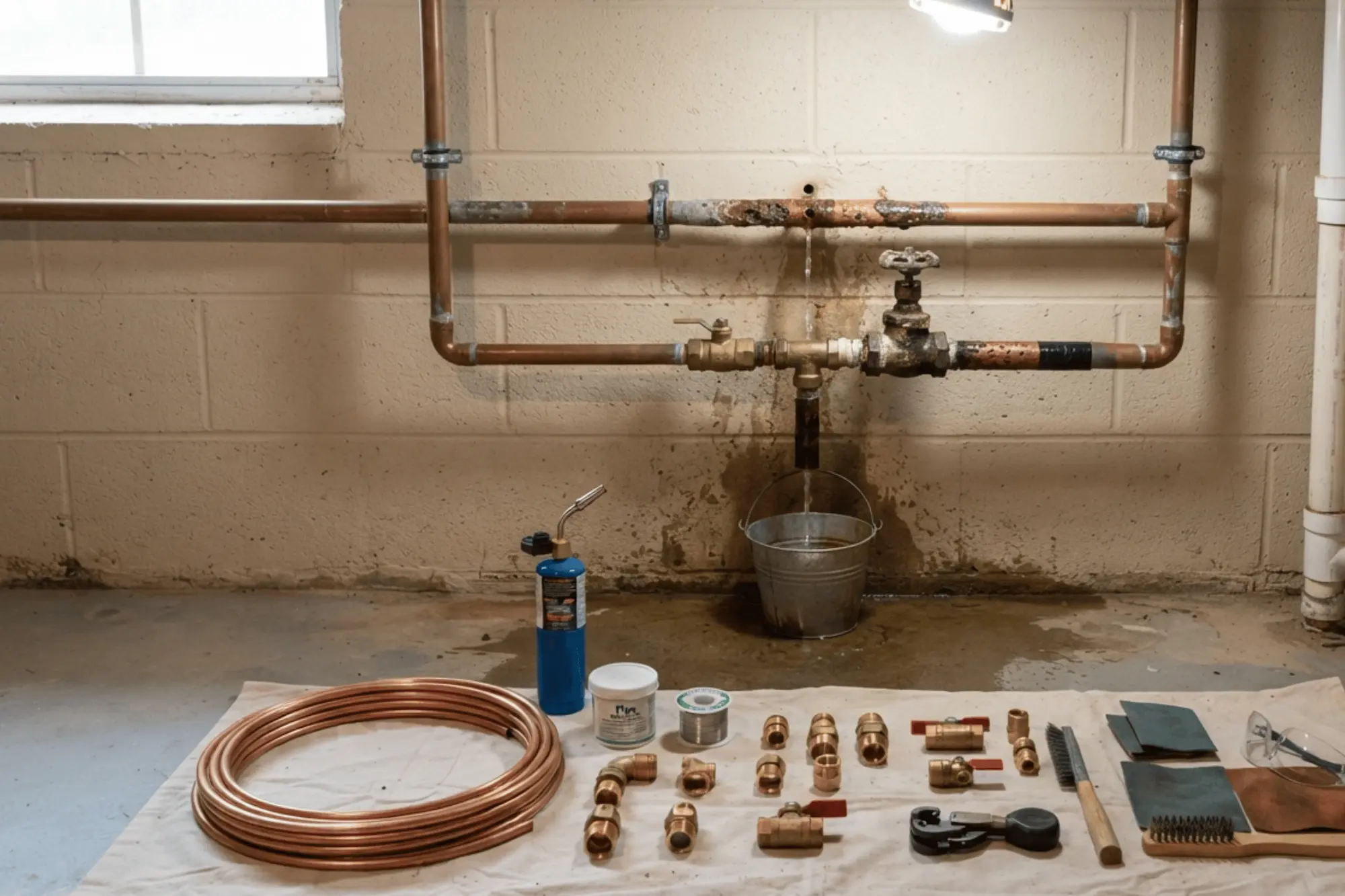
Galvanized pipe usually gives more warning, showing up first as reduced water pressure and rust-colored water as internal corrosion builds up. But that same corrosion also thins the pipe wall over time, and a severely corroded section can eventually rupture, particularly at threaded joints where the metal is already weakest.
Warning Signs Your Older Home Needs a Repipe
- Rust-colored or metallic-tasting water, especially noticeable when you first turn on a tap after the water has sat in the pipe overnight.
- Noticeably low water pressure that has gradually worsened over months or years rather than appearing suddenly.
- Visible gray or bluish plastic pipe under sinks, in the attic, or in the garage, which is the clearest sign of polybutylene.
- Frequent pinhole leaks or fitting failures in different parts of the home within a short span of time.
- A home built between 1978 and 1995 that has never had its original supply lines replaced or inspected.
If you’re already seeing an active leak, a same-day pipe repair can stop the immediate damage, but it’s worth having the rest of the system evaluated at the same visit since one failure in old pipe is rarely an isolated event.
The Real Risks of Waiting
Insurance Complications
Many homeowners insurance carriers in Texas now ask directly about polybutylene or galvanized pipe during underwriting, and some will decline coverage, require a plumbing inspection, or charge higher premiums for a home that still has either material. If you’re planning to sell, a buyer’s inspector will almost certainly flag it, which can slow down or complicate a sale.
Sudden, Expensive Water Damage
Because both materials tend to fail without much warning, homeowners often come home to standing water rather than catching a slow leak early. Water damage behind drywall, under flooring, and inside cabinetry adds up quickly, and mold remediation after a hidden leak can cost more than the repipe itself would have.
Reduced Water Quality
Corrosion inside aging galvanized pipe doesn’t just restrict flow, it can also affect water clarity and taste throughout the house, which is a quality-of-life issue even before any leak occurs.
How to Identify What Pipe Material You Have
Start by looking at any exposed pipe in your attic, garage, crawl space, or under sinks. Galvanized pipe is dull gray metal with visible threading at each joint, while polybutylene is a flexible plastic tube, usually gray but sometimes black or blue, connected with plastic or metal crimp fittings. If your home was built or last replumbed between 1978 and 1995, poly-B is worth checking for specifically. When pipe isn’t visible or you’re not confident identifying it yourself, a licensed plumber can typically confirm the material during a standard water line inspection in under an hour.
Repiping Options for Older Homes
The good news is that replacing either material is a well-established process. Most homeowners choose whole house repiping with modern PEX tubing, since it installs with minimal wall damage and holds up well against Houston’s water conditions. Homeowners who prefer a rigid metal system, or who need to match existing exposed copper runs, can opt for a full copper repiping instead. If you’re still deciding between the two, our guide comparing PEX vs. copper repiping breaks down the cost and performance differences in more detail.
A typical repipe replaces every supply line in the home over the course of a few days, with plumbers working section by section to keep water service interrupted for as short a time as possible.
Can You Reduce Your Risk While You Decide?
If a full repipe isn’t in the budget right away, a few precautions can lower your risk in the meantime. Keeping household water pressure at or below 60 PSI reduces the stress on already-weakened pipe walls, since older galvanized and polybutylene systems were never engineered for today’s higher municipal pressures in some parts of Houston. It’s also worth knowing where your main shutoff valve is and making sure everyone in the household can find it quickly, since a fast shutoff is often the difference between a minor cleanup and a major water damage claim. None of this replaces a repipe, but it can buy you time to plan the project properly rather than reacting to an emergency.
What the Research and Regulators Say
Polybutylene’s failure pattern is well documented outside the plumbing industry itself. Professional home inspection organizations, including the American Society of Home Inspectors, have published guidance for years advising inspectors to flag poly-B piping specifically because of its history of sudden failure. On the galvanized side, much of the health concern isn’t the zinc coating itself but what it can hide: older galvanized systems sometimes connect to even older lead-containing fittings, which is part of why the EPA continues to enforce strict lead-free requirements for any plumbing material or fitting that touches drinking water today.
Frequently Asked Questions
How do I know if my home has polybutylene pipe?
Check exposed pipe in your attic, crawl space, or under sinks for gray, black, or blue flexible plastic tubing with plastic or metal crimp fittings, and note whether your home was built between 1978 and 1995.
Is it safe to keep using galvanized pipe if I haven’t had any leaks yet?
It’s not automatically dangerous, but corrosion is progressive and invisible from outside the pipe, so the absence of a leak so far doesn’t mean the interior isn’t already significantly narrowed or weakened.
Can I replace just the polybutylene sections instead of the whole system?
Partial replacement is possible, but since the chlorine damage typically affects the entire system evenly, most plumbers recommend a full repipe rather than replacing sections and leaving equally aged pipe in place.
Will repiping my home increase its resale value?
Yes, a documented repipe removes a common inspection red flag and can make a home easier to insure and sell, particularly to buyers whose lenders require an inspection.
How much does it cost to repipe an older home?
Cost depends on square footage, the number of fixtures, and how accessible the existing pipe is, which is why an in-person inspection gives a far more accurate estimate than a general price range.
Does homeowners insurance ever cover repiping an older home?
Some insurers offer a credit or lower premium after a repipe is completed, but very few cover the preventative cost of the repipe itself before a failure occurs.
If your Houston home still has its original galvanized or polybutylene supply lines, don’t wait for a hidden leak to force the decision. Contact Affordable Plumbing Services today to schedule an inspection, and our licensed plumbers will tell you honestly whether a repipe makes sense now or whether your system has more life left in it.