
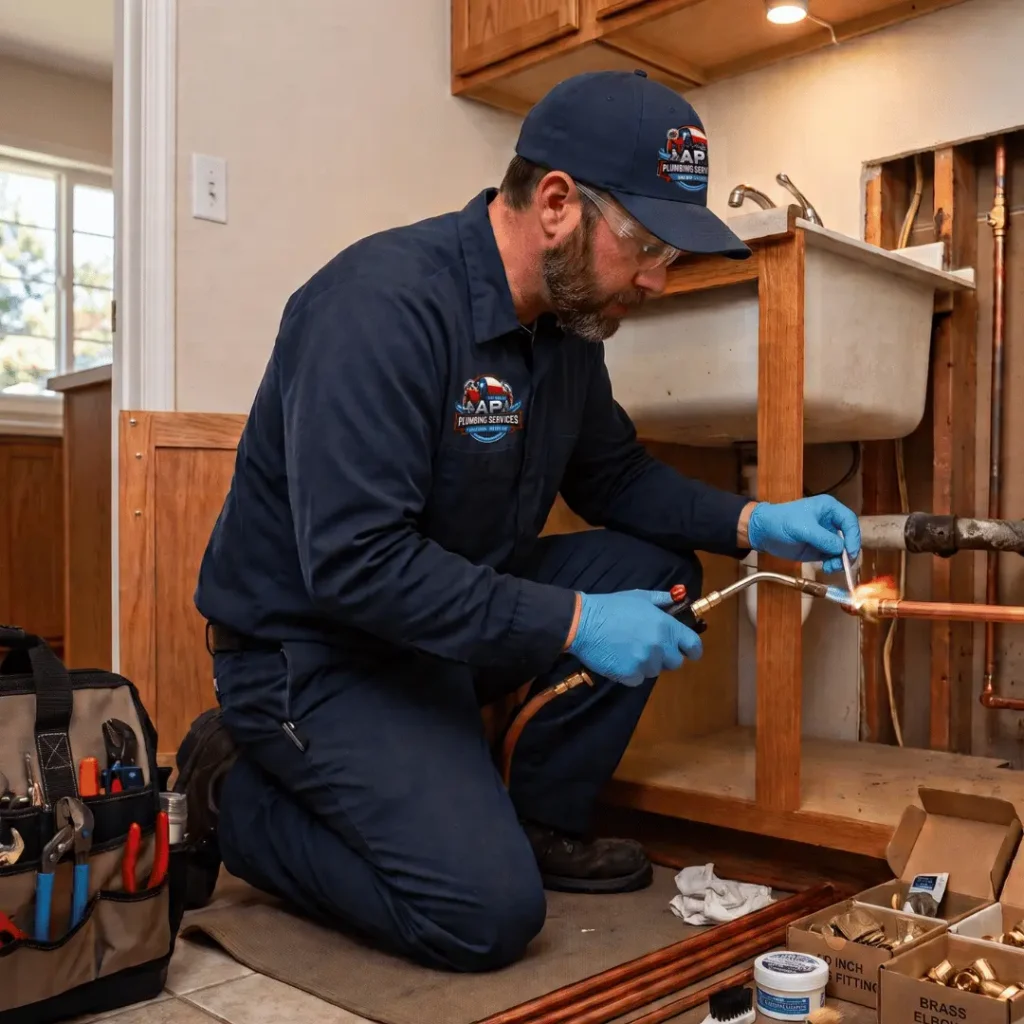
If you’ve noticed discolored water at the tap, a pinhole leak that suddenly appeared in a ceiling or wall, or water pressure that drops the moment two fixtures run at once, your home’s original supply lines may be nearing the end of their service life. In Houston, where hard water and shifting clay soil put extra stress on aging pipe, small leaks rarely stay small for long. A “quick patch” today often turns into a bigger repair bill within a year or two.
Once repiping becomes the right call, the biggest decision homeowners face is material: PEX or copper. Both are approved for residential water supply lines, both show up in new construction across the Houston area, and both have loyal contractors on either side of the debate. This guide breaks down how each material actually performs, what it costs, and which one makes sense for your specific home, so you can have an informed conversation with your plumber instead of just accepting whatever gets quoted first.
Signs Your Houston Home May Need a Repipe
Repiping isn’t usually the response to a single leak — it’s what a plumber recommends once your existing lines show a pattern of failure rather than one isolated problem.
- Recurring pinhole leaks: Multiple unrelated leaks appearing in different rooms over a short period usually mean the pipe material itself is failing, not just one bad section.
- Discolored or metallic-tasting water: Rust-colored water from galvanized steel, or a metallic taste from corroding copper, signals that the interior of the pipe is breaking down.
- Low or uneven water pressure: Mineral buildup and internal corrosion narrow the pipe’s interior diameter over time, choking off flow throughout the house.
- Visible corrosion or greenish stains: Blue-green staining around copper fittings or flaking rust on exposed galvanized pipe both point to active corrosion.
- Pipe age beyond its expected lifespan: Galvanized steel typically fails within 40 to 50 years, and even well-installed copper starts showing pinhole leaks after 50 years in Houston’s water conditions.
If you’re dealing with an active leak right now rather than planning ahead, a targeted water leak repair can buy you time while you decide whether a full repipe makes more sense long term.
What Is PEX Pipe?
PEX, short for cross-linked polyethylene, is a flexible plastic tubing that has largely replaced copper in new residential construction over the past two decades. Because it bends around corners and through wall cavities, installers can run it with far fewer joints and fittings than a rigid metal pipe requires, and fewer joints means fewer places for a future leak to start.
How PEX Is Installed
Most PEX repipes use a home-run manifold system, where each fixture gets its own dedicated line running back to a central manifold near the water heater or main shutoff. This design means a single valve can isolate one fixture without shutting off water to the rest of the house, and it also improves water pressure consistency since fixtures aren’t sharing a branch line.
Where PEX Falls Short
PEX isn’t rated for outdoor or direct sunlight exposure, since UV breaks down the material over time, so any exterior hose bibs still need a short copper or CPVC stub-out. It’s also vulnerable to damage from rodents in attics and crawl spaces, and it can’t be installed within a certain distance of an open flame or water heater flue, which means a short section of copper is often still required near gas water heaters.
What Is Copper Pipe?
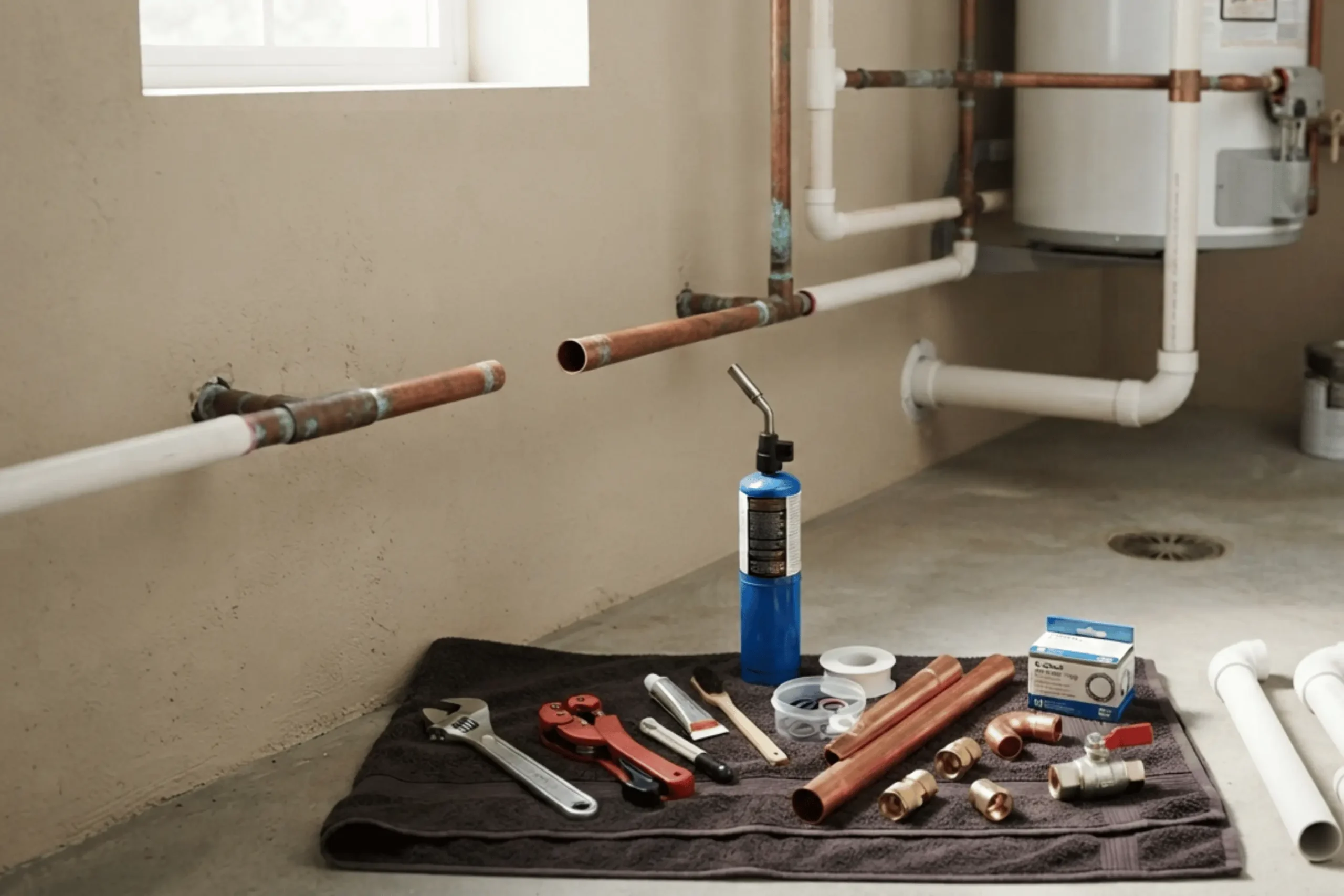
Copper has been the standard for residential water lines for most of the last century, and for good reason. It’s rigid, naturally resistant to bacteria, unaffected by UV exposure, and can handle high temperatures without any risk of softening or deforming.
Types of Copper Pipe
Type M copper has thinner walls and costs less, making it common in interior residential supply lines. Type L has thicker walls and is typically required for underground runs or commercial applications. Type K is the thickest and most expensive, generally reserved for underground water service lines.
Where Copper Falls Short
Copper costs significantly more than PEX in both material and labor, since every joint has to be cut, cleaned, fluxed, and soldered by hand. Houston’s water chemistry, combined with acidic flux residue left inside newly soldered joints, can also accelerate the pinhole leaks that show up in copper systems 20 to 30 years after installation. Copper is also noisier, prone to the “water hammer” banging sound when a valve closes quickly, and rigid copper can split if water inside it ever freezes.
PEX vs. Copper: Side-by-Side Comparison
| Factor | PEX | Copper |
| Material & installation cost | Lower — less labor, fewer fittings | Higher — soldering is labor-intensive |
| Corrosion resistance | Not affected by hard water or acidic water | Can develop pinhole leaks over time |
| Freeze resistance | Expands slightly, resists bursting | Can split if water freezes solid |
| Noise | Quieter, dampens water hammer | Prone to banging pipes |
| UV / outdoor exposure | Degrades in direct sunlight | Unaffected by UV |
| Typical lifespan | 40 to 50+ years | 50+ years when properly installed |
| Best suited for | Whole-house repipes, tight wall cavities | Exposed runs, gas water heater connections |
Which Pipe Material Fits Your Houston Home?
When PEX Makes More Sense
If you’re repiping an entire home, especially one with plaster walls or tight framing where snaking flexible tubing is far less invasive than running rigid pipe, PEX is usually the more practical and cost-effective choice. It also holds up better against Houston’s hard water over the long run, since mineral content and slightly acidic water don’t corrode plastic the way they can corrode copper.
When Copper Makes More Sense
Exposed pipe runs in garages, mechanical rooms, or anywhere near a heat source still favor copper, since it can’t be damaged by rodents or UV and handles high heat without question. Many local codes also still require a short copper connection at the gas water heater regardless of what material serves the rest of the house.
What a Professional Repiping Project Actually Involves
A well-run repipe follows a consistent process regardless of which material you choose:
- Inspection and planning: A licensed plumber maps your existing plumbing layout and identifies the most efficient new routing.
- Material and route selection: Based on your home’s construction and budget, the plumber recommends PEX, copper, or a hybrid approach.
- Section-by-section replacement: Old pipe is removed and new lines are run, typically working one area of the house at a time to minimize how long water service is interrupted.
- Pressure testing: Every new line is tested under pressure to confirm there are no leaks before walls are closed back up.
- Wall and drywall patching: Access points are patched and sealed, ready for paint or texture matching.
Whether you decide on flexible PEX or traditional metal, our Whole House Repiping team handles the entire process, and for homes that specifically want to stick with metal supply lines, our Copper Repiping service follows the same code-compliant standards.
Protecting Your Investment After a Repipe
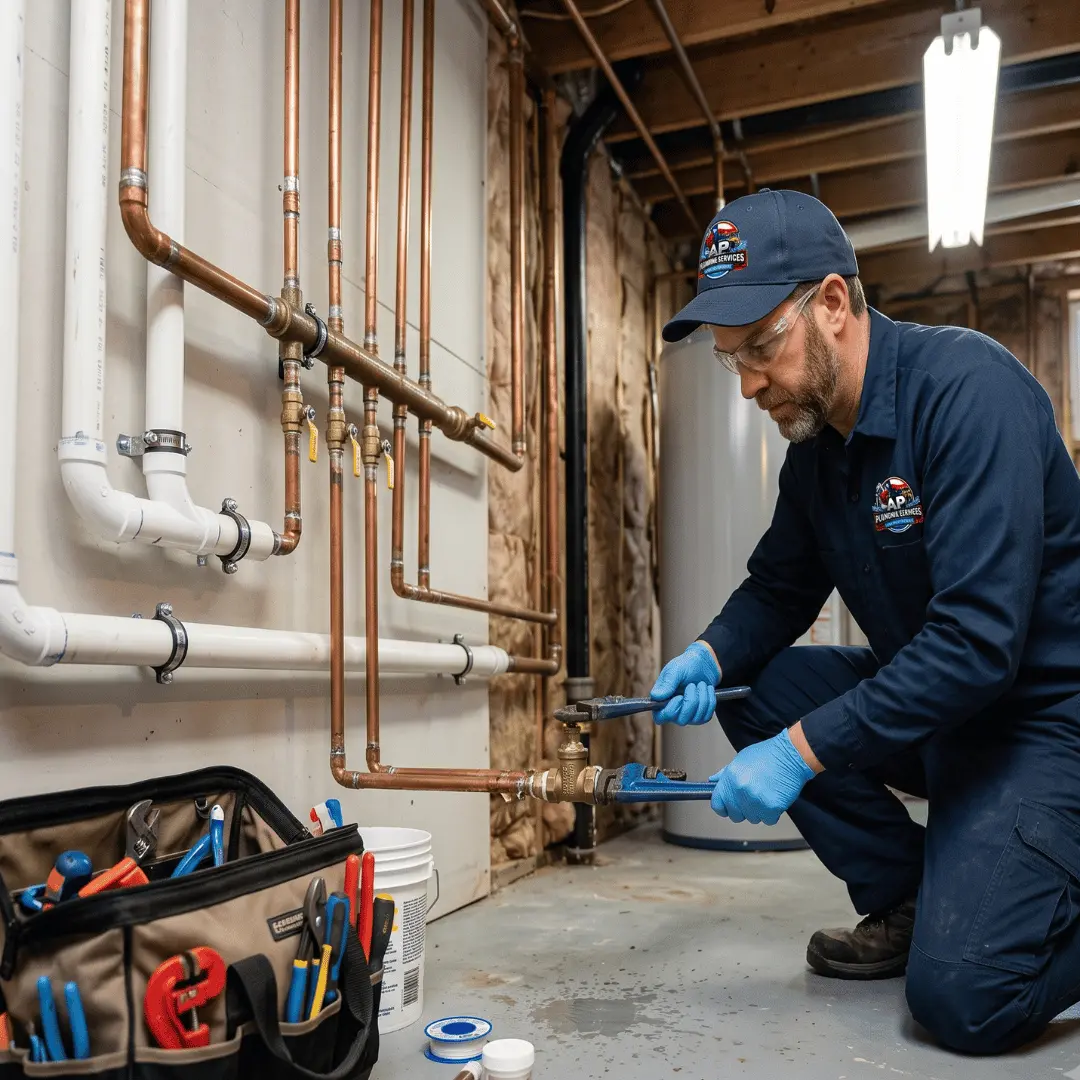
New pipe doesn’t mean zero maintenance. It’s still worth having your water heater connections checked periodically, since that’s often where copper stub-outs remain even in an otherwise all-PEX home, and any fixture supply lines that weren’t part of the original repipe scope should be inspected at the same time. Both PEX and copper are certified under NSF/ANSI Standard 61, the national health standard confirming a plumbing material won’t leach unsafe levels of contaminants into your drinking water, so you’re not sacrificing safety no matter which one you choose. If your home still has older soldered copper joints, it’s worth knowing that lead-based solder was banned in potable water systems under the 1986 amendments to the Safe Drinking Water Act, a change the EPA still enforces today.
Frequently Asked Questions
How long does a whole-house repipe take?
Most single-family homes take two to four days for a complete repipe, depending on square footage, the number of fixtures, and whether walls need to be opened in multiple areas.
Can I mix PEX and copper in the same home?
Yes, and many homes do. It’s common to run PEX through walls and attics while keeping short copper stub-outs at the water heater or any exposed exterior connections.
Does PEX affect water taste or safety?
No. PEX certified to NSF/ANSI 61 has been tested extensively and does not add any harmful taste or chemicals to drinking water at normal household temperatures.
How much does repiping a house cost in Houston?
Cost depends heavily on square footage, number of fixtures, and wall access, which is why an in-person inspection gives a far more accurate number than a phone estimate.
Will I have water during the repiping process?
Your plumber will typically shut off water only to the specific section being worked on each day, so most of the home retains water service throughout the project.
Does homeowners insurance cover repiping?
Insurance generally covers sudden, accidental damage caused by a pipe failure, but it typically does not cover the preventative cost of replacing old pipe before it fails.
If your Houston home is showing the warning signs of failing pipe, don’t wait for a small leak to become a major water damage claim. Contact Affordable Plumbing Services today to schedule an inspection, and our licensed plumbers will help you decide between PEX and copper based on your home’s actual condition, not a one-size-fits-all answer.