
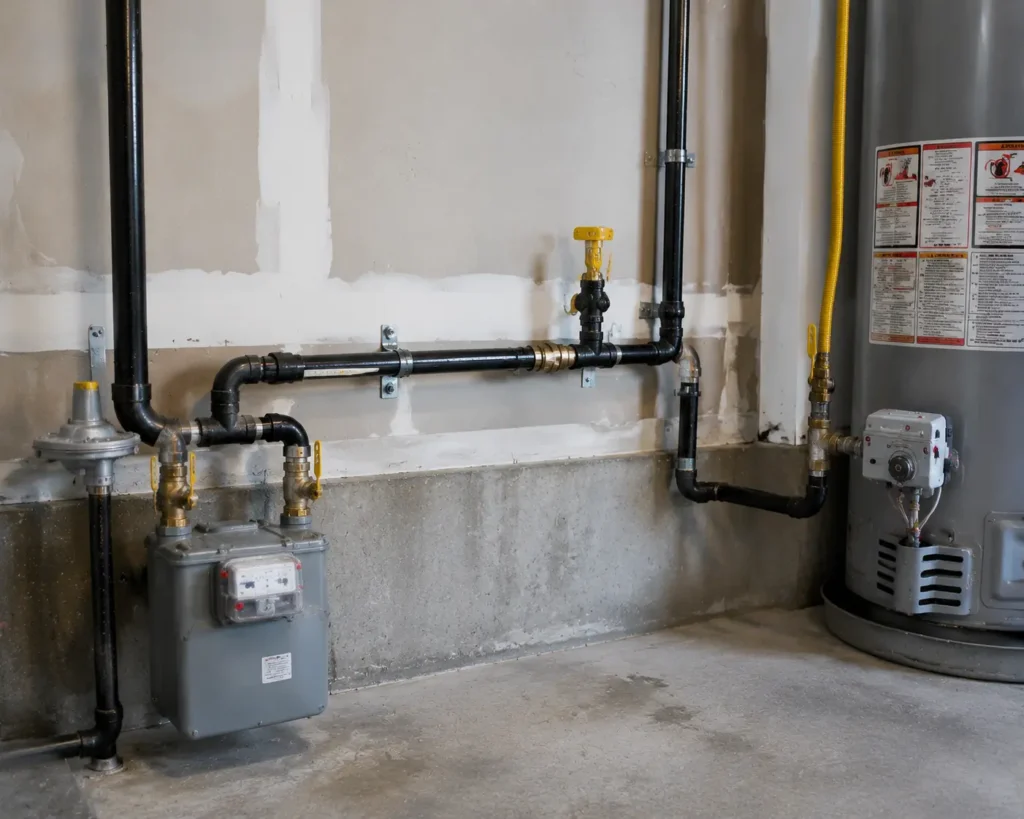
Adding a gas range, an outdoor grill, or a gas pool heater is one of the most requested upgrades among Houston homeowners, and for good reason: gas appliances heat faster, run cheaper over time, and keep working during a power outage. But running a new gas line isn’t a simple tap into the nearest existing pipe. It involves load calculations, code-approved materials, permits, and pressure testing that go well beyond what most homeowners realize going in.
Getting it wrong doesn’t just risk a failed inspection, it risks a gas leak inside or near your home. This guide walks through what actually happens when a new gas line is added, what determines cost and feasibility, and which parts of the process absolutely require a licensed professional.
Why You Can’t Just Tap Into an Existing Gas Line
Every gas line in your home is sized to handle a specific total load, measured in BTUs per hour, based on the appliances it was originally designed to serve. Simply splicing a new branch line into an existing run without recalculating that load can starve every appliance on the line of adequate gas pressure, causing pilot lights to sputter, burners to run weak, or in worse cases, incomplete combustion that produces excess carbon monoxide.
Adding a stove, grill, or pool heater almost always means extending the line from the meter or a main trunk line specifically sized for the new total demand, not just connecting to whatever pipe happens to be nearby.
Step 1: Calculating Total Gas Demand
Before any pipe gets cut, a plumber calculates the combined BTU demand of every appliance that will run off the same gas meter, including the new one you’re adding. A typical gas range uses around 65,000 BTUs, an outdoor grill can range from 30,000 to 60,000 BTUs, and a gas pool heater often demands 150,000 to 400,000 BTUs depending on pool size, making it by far the largest single load most homes will ever add.
That total demand determines two things: whether your existing gas meter has enough capacity to supply the new appliance at all, and what diameter pipe is required to deliver that volume of gas without a significant pressure drop over the distance it has to travel.
Step 2: Choosing the Right Pipe Material and Route
Black steel pipe remains the most common material for gas lines, particularly for exposed interior runs, since it’s durable and has decades of proven performance. Corrugated stainless steel tubing, known as CSST, has become popular for its flexibility, letting installers route it through framing with far fewer joints than rigid steel requires, which can reduce both labor time and the number of potential leak points.
For outdoor additions like a grill or pool heater, the route usually means running new pipe underground in a properly rated sleeve, or along an exterior wall with weather-appropriate fittings, both of which require different techniques than a straightforward interior run to a kitchen range.
Step 3: Permits and Inspections
Gas line work requires a permit in Houston and virtually every surrounding municipality, and for good reason. A licensed plumber pulls the permit, completes the installation to code, and schedules the required inspection before the line is buried or a wall is closed up. DIY gas work isn’t just a code violation, it’s a genuine safety hazard, since an improperly sealed joint or undersized line can leak gas without any obvious sign until it reaches a dangerous concentration.
Common Gas Line Addition Projects
Adding a Gas Range or Stove
Kitchen gas line additions are usually the most straightforward, since the appliance sits close to existing gas infrastructure and the load is relatively modest. Most installations can be completed in a single visit, including the connection, leak test, and appliance hookup.
Adding a Gas Grill or Outdoor Kitchen
Outdoor gas lines need to be run either underground or along a protected exterior route, with a dedicated shutoff valve installed near the appliance itself. This lets you isolate the grill line for maintenance or during severe weather without shutting off gas to the entire house.
Adding a Gas Pool Heater
Because pool heaters demand so much more gas than a typical household appliance, this project almost always requires the largest pipe upgrade and the most careful load calculation of the three. In many cases, the existing meter itself needs to be upsized by the gas utility before the new heater can be safely connected.
Our Gas Line Installation team handles all three of these scenarios regularly, from a straightforward range hookup to a full meter upgrade for a new pool heater.
Safety Considerations Every Homeowner Should Know
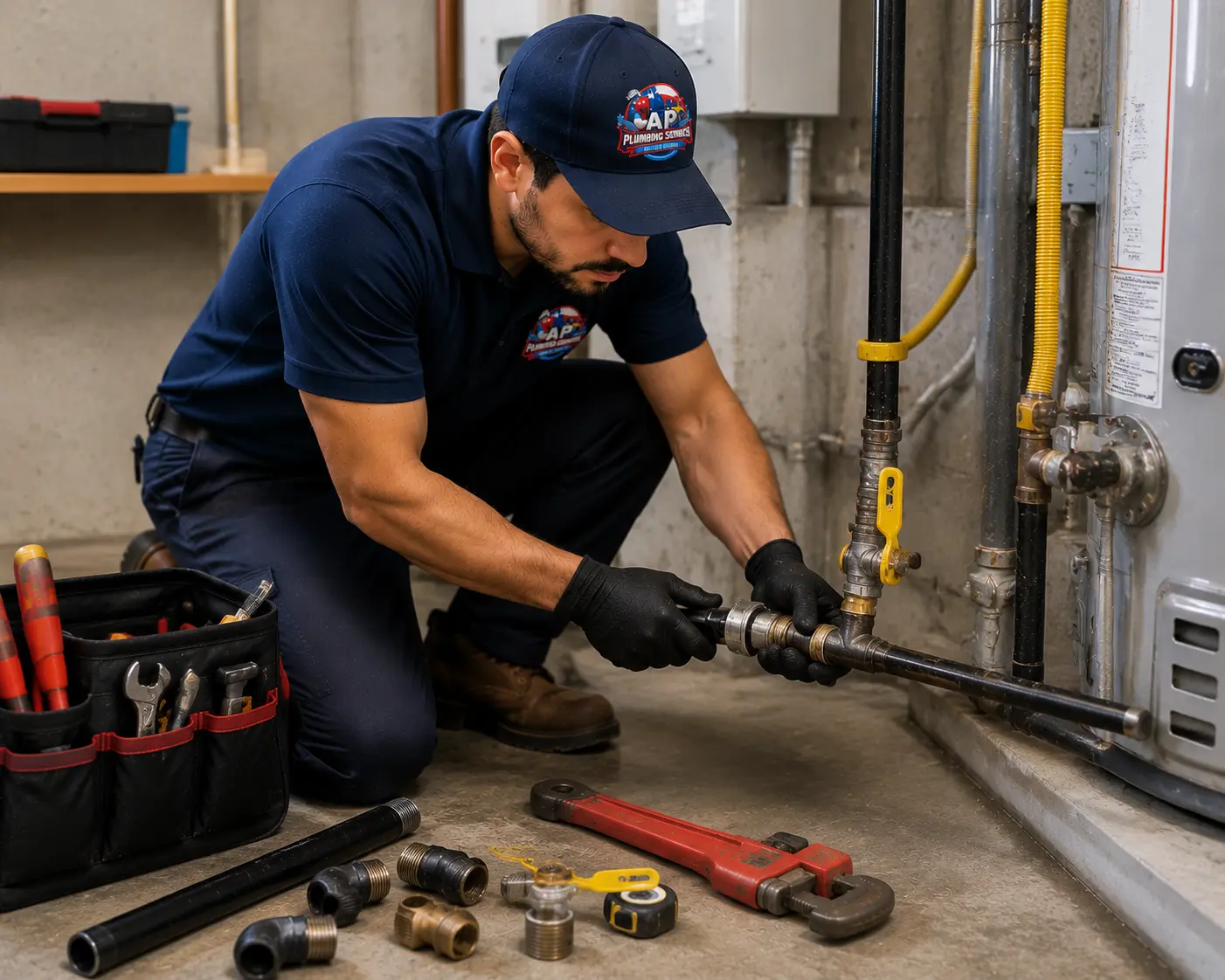
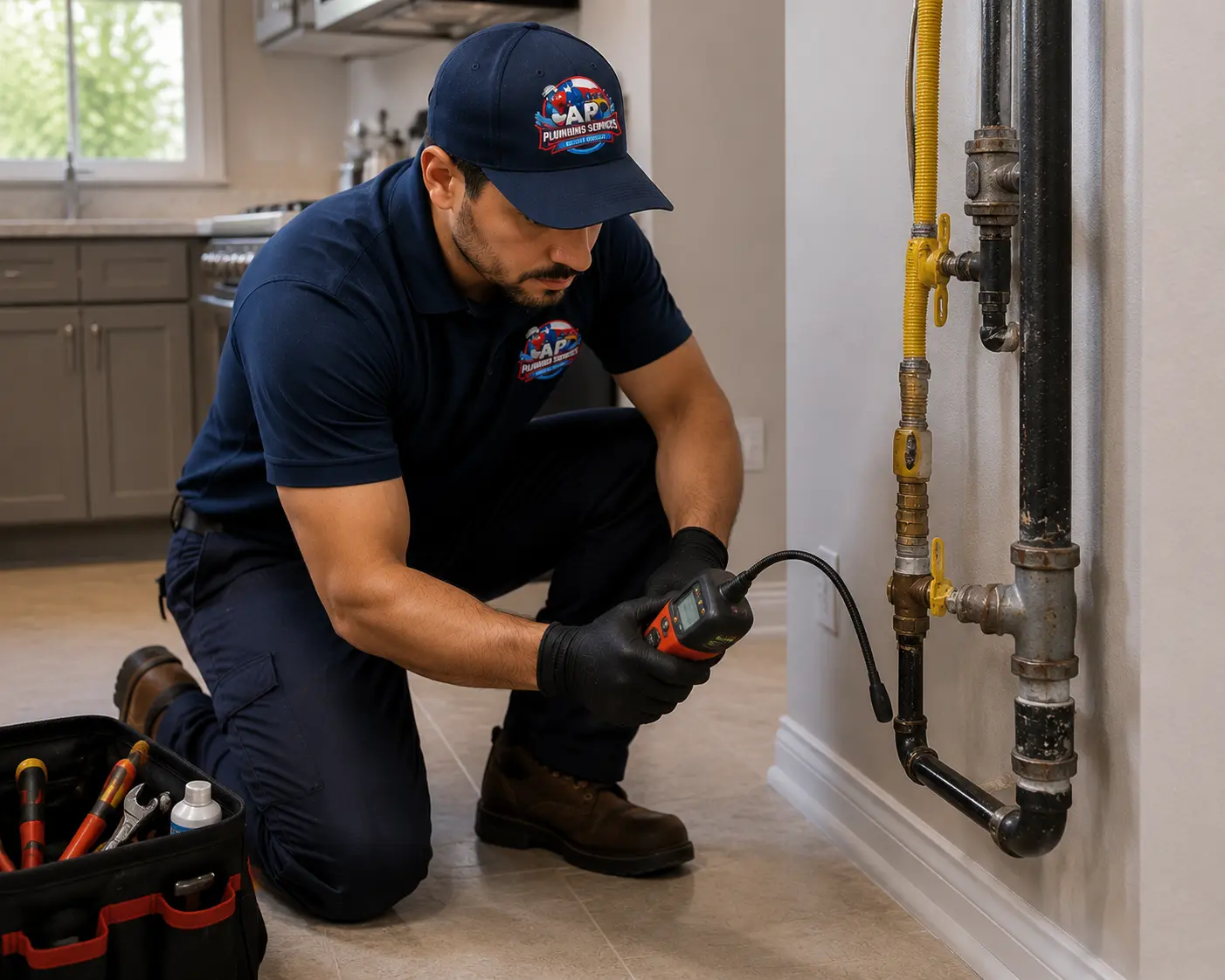
Once a new line is installed, every joint gets pressure tested before the gas is turned on, confirming there are no leaks anywhere along the run. If you ever smell the distinct rotten-egg odor added to natural gas for detection purposes, hear hissing near a gas fitting, or notice unexplained dead vegetation near an underground line, treat it as an emergency: leave the area, avoid using anything that could create a spark, and call for gas leak detection immediately rather than trying to locate the source yourself.
It’s also worth having carbon monoxide detectors installed near any room containing a gas appliance, and having your gas appliances and connections inspected periodically, especially if you notice a yellow or flickering flame instead of a steady blue one, which can indicate incomplete combustion.
What to Expect From a Professional Installation
- Load calculation and site assessment: The plumber calculates total BTU demand and inspects your current meter capacity and existing line routing.
- Permit application: A permit is filed with the city before any work begins.
- Pipe installation: New line is run using code-approved material and routing for your specific appliance and location.
- Pressure and leak testing: Every joint is tested under pressure to confirm a completely sealed system.
- Appliance connection and inspection: The appliance is connected, tested, and the work is signed off by the required inspection.
If your existing gas pipe is older galvanized or shows any corrosion during this process, it’s often worth addressing with a gas pipe replacement at the same time rather than connecting a new appliance to aging infrastructure.
Natural Gas vs. Propane: Does It Change the Process?
Most Houston homes run on natural gas supplied through the municipal utility, but some outdoor kitchens and pool equipment are set up to run on propane from a dedicated tank instead. The core installation process is similar, since both fuels use comparable pipe sizing principles and require the same pressure testing, but propane systems run at a different pressure than natural gas and need regulators and fittings rated specifically for it. If you’re adding a grill or pool heater and already have a propane tank on the property, let your plumber know upfront so they can size the line and select fittings for the correct fuel type rather than assuming natural gas by default.
Codes That Govern Gas Line Work
Gas piping installations across the country, including Houston, are governed by the National Fuel Gas Code (NFPA 54), which sets the technical standards for pipe sizing, materials, and appliance connections that local permitting offices enforce. At the state level, the Railroad Commission of Texas oversees natural gas pipeline safety and damage prevention across the state, which is part of why any excavation for an underground gas line addition should always start with a utility locate request before digging begins.
Frequently Asked Questions
Do I need a permit to add a gas line for a grill or stove?
Yes, gas line work requires a permit and inspection in Houston and surrounding areas, regardless of how small the addition seems.
How long does it take to add a new gas line?
A simple indoor connection, like a range hookup, can often be completed in a few hours, while outdoor additions or pool heater installations that require trenching typically take a full day or more.
Will adding a pool heater require upgrading my gas meter?
Often, yes. Pool heaters demand significantly more BTUs than most household appliances combined, and your existing meter may not have enough capacity without an upgrade from the gas utility.
Can I run my own gas line if I’m comfortable with basic plumbing?
No. Gas line work requires a licensed plumber in virtually every jurisdiction, both because of the permit requirement and because an improperly sealed gas joint is a genuine safety hazard.
What does it cost to add a new gas line?
Cost depends on the distance from your existing line, whether the run is indoors or requires trenching outdoors, and whether a meter upgrade is needed, so an on-site assessment gives the most accurate number.
How do I know if my current gas line can handle a new appliance?
A licensed plumber calculates your total BTU demand across all existing and planned appliances to determine whether your current line and meter have enough capacity, or whether an upsize is required.
What should I do if I smell gas after a new appliance is installed?
Leave the area immediately, avoid switches or anything that could spark, and call for emergency gas leak detection rather than attempting to locate or fix the smell yourself.
Whether you’re finally getting that gas range you’ve wanted, adding a grill to your outdoor kitchen, or upgrading to a gas pool heater before summer, don’t leave the gas line work to guesswork. Contact Affordable Plumbing Services today to schedule a licensed gas line installation, complete with proper permitting, load calculations, and a full safety inspection.