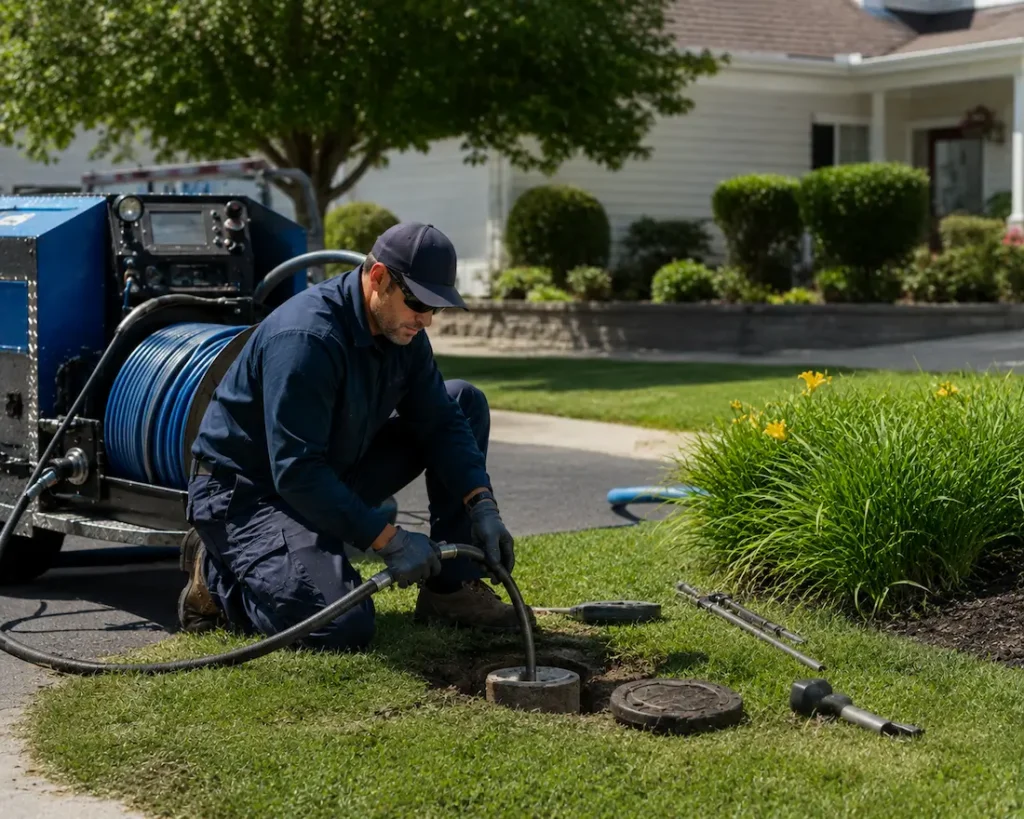
A backed-up or broken sewer line is every homeowner’s nightmare. Historically, repairing damaged underground pipes meant heavy excavators rolling across your property, tearing up manicured lawns, destroying expensive driveways, and disrupting landscaping for weeks. Fortunately, modern plumbing technology has evolved. Trenchless sewer line repair allows professional plumbers to restore or completely replace underground sewer pipes quickly, efficiently, and with minimal disruption to your yard.
What Is Trenchless Sewer Line Repair?
Trenchless sewer repair encompasses advanced non-invasive methods used to fix cracked, corroded, or tree-root-damaged underground pipes from the inside out. Rather than digging a continuous trench along the entire length of your sewer lateral, technicians utilize small access entry points to inspect, clean, and rehabilitate damaged piping using specialized epoxy resins or pipe-bursting equipment.
| Repair Method | Primary Technique | Structural Lifespan | Typical Yard Disruption |
| Traditional Open-Trench | Heavy excavation along full pipe length | 30–50 years | Severe (Destroys lawns, decks, driveways) |
| Cured-In-Place Pipe (CIPP) Lining | Inflexible epoxy resin liner inverted into existing pipe | 50+ years | Minimal (Requires single small entry access point) |
| Pipe Bursting | Hydraulic head breaks old pipe while pulling new HDPE pipe | 50+ years | Minimal (Requires two small entry and exit pits) |
Both primary trenchless techniques create a seamless, joint-free pipe system that naturally resists future root intrusion and structural cracking for decades.
Modern Trenchless Repair Methods Explained
Understanding how non-invasive sewer rehabilitation works helps homeowners choose the right solution for their specific pipe condition.
1. Cured-In-Place Pipe (CIPP) Lining
Pipe lining, or cured-in-place piping (CIPP), essentially creates a brand-new pipe inside your old, damaged pipe. Technicians insert a flexible, epoxy-saturated felt tube into the damaged sewer line through an existing cleanout access. Once positioned, an inflatable bladder expands the tube against the interior pipe walls, where heat or UV light cures the epoxy into a rigid, smooth structural lining.
2. Hydraulic Pipe Bursting
When a sewer line has collapsed entirely or suffers from severe belly sags, pipe lining may not be feasible. In these instances, pipe bursting provides an effective alternative. A heavy hydraulic bursting head is pulled through the old damaged pipe, fracturing the original clay, cast iron, or PVC pipe outward into the surrounding soil while simultaneously pulling a continuous, high-density polyethylene (HDPE) pipe directly into place behind it.
For guidance on maintaining home drainage networks and preventing sewer backups, explore our comprehensive residential plumbing and drain services.
Key Benefits of Going Trenchless
Choosing no-dig plumbing solutions delivers significant advantages across cost, convenience, and long-term durability.
1. Preserves Landscaping and Hardscapes
The most obvious benefit of trenchless repair is the protection of your outdoor living spaces. Traditional sewer excavation destroys mature trees, flower beds, concrete driveways, retaining walls, and paved patios. Rebuilding those surface features after a plumbing job can add thousands of dollars in hidden landscaping expenses. Trenchless techniques preserve your curb appeal completely.
2. Faster Completion and Less Neighborhood Disruption
Conventional trench excavation often takes anywhere from three days to a full week, leaving open pits and hazardous heavy equipment on your property. In contrast, most residential trenchless pipe lining projects are completed within 1 to 2 days, restoring full household water service within hours rather than days.
3. Superior Jointless Pipe Durability
Traditional sewer pipes constructed from clay tile or cast iron contain numerous joints every few feet. Tree roots naturally seek out moisture, expanding into these tiny joint gaps and causing chronic blockages. According to plumbing safety standards supported by the U.S. Environmental Protection Agency (EPA), continuous HDPE and epoxy-cured resin pipes eliminate seams entirely, drastically reducing sanitary sewer overflows and environmental contamination.
4. Improved Flow Capacity and Root Resistance
The ultra-smooth interior surface of epoxy resin or seamless HDPE piping reduces frictional resistance inside the line. Waste moves faster and more efficiently, preventing heavy solids from settling and creating persistent line clogs.
To learn more about keeping your drains running smoothly, check out our practical article on preventing residential drain blockages for essential maintenance tips.
Step-by-Step Trenchless Repair Process
Certified plumbing contractors follow a strict technical procedure to ensure long-term structural success.
- High-Definition HD Sewer Camera Inspection
- Insert camera down cleanout to locate cracks, root intrusion, or sags.
- Measure exact pipe length, diameter, and structural integrity.
- High-Pressure Hydro-Jetting & Mechanical Cleaning
- Blast away scale, grease, sludge, and tree roots using water pressure.
- Return the pipe interior to its original diameter before lining.
- Epoxy Liner Inversion or Pipe-Bursting Execution
- Pull resin-soaked liner into place or pull new HDPE pipe via winch.
- Inflate and heat-cure epoxy until rigid, smooth pipe forms inside.
- Final Camera Verification & Service Restoration
- Re-insert HD camera to verify complete curing and seamless jointing.
- Reconnect household fixtures and restore immediate water flow.
Guidelines published by the U.S. Department of Housing and Urban Development (HUD) highlight that non-invasive infrastructure rehabilitation methods significantly extend residential service utility while lowering long-term maintenance costs for property owners.
Restore your home’s sewer flow without ruining your beautiful lawn. Contact us today to schedule your high-definition sewer camera inspection and trenchless repair estimate!